Saturday, March 22, 2014

Control Your Husband Using a Remote?

This is a post about the classified ads in Swazi newspapers (The Times of Swaziland, in this case). It's a lovely paper, with questionable credibility, cited sources ranging from "The Google" to "Wikipedia,"  and pictures from stock databases. But, the one thing they do have are the most amazing classifieds - they start rather similarly to newspapers in America. But then, after a few pages, you reach the sangoma (witch doctor) ads. (Sorry to make you turn your head - the internet doesn't like me, and the connection is simply too slow to do anything about the rotation).

 But seriously - this is no joke. You don't mess with the sangomas.


Friday, March 21, 2014

HOW I ENTERED MALAWI ILLEGALLY - AN EPIC TALE.

PROLOGUE: THIS IS GOING TO BE THE LONGEST POST EVER.

Last August, I went on a grand travelling adventure. and then never actually posted anything about it on here. Sad.

In April and May, I have another term break, and will be going on another grand adventure, and so to lead up to that, I'm going to try and post a few of the stories that I've been hoarding from August. I know, this is really not in a timely manner, and goes against everything the internet stands for in terms of being "instantaneous," but whatever. I run on Swazi time.

Without further to do, I present to you...

"THE STORY OF HOW I ENTERED MALAWI ILLEGALLY."

This is a story that is hard to start, because it's kind of an epic saga that takes three days to build up to. So, I'll start three days beforehand. I was hitch-hiking from Bulawayo, Zimbabwe, making my way up into Zambia, and then just further north and north up into Zambia, where I would take a sharp right and head over into Malawi. And taking a right was about as specific as my directions were, because I didn't bring a map on this adventure.

CHAPTER ONE: MPIKA - THE ROUTE

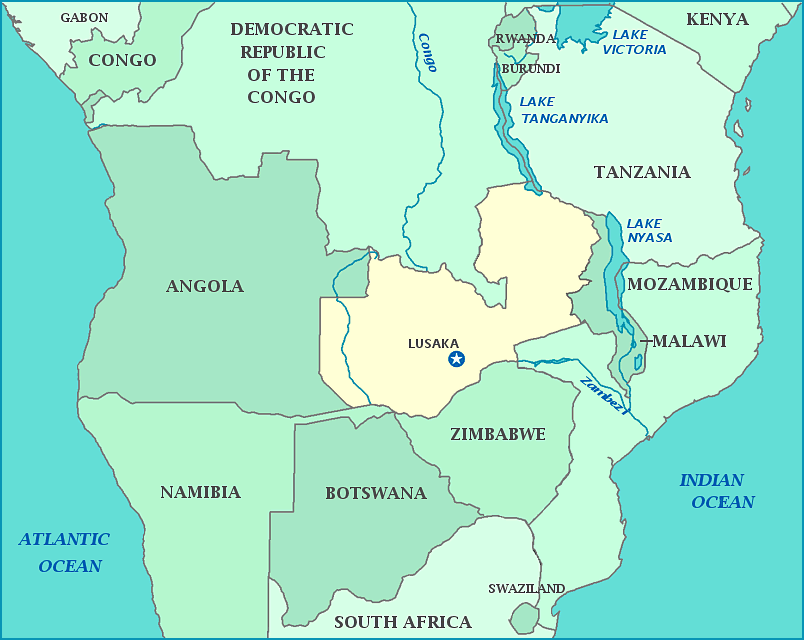
So, one night, a truck drops me off in Mpika, Zambia. Here are a few maps for your reference in this story: the yellow country on the first one is Zambia, and the red dot on the second one is Mpika.


I find my way to an inn, pay my fee for the night (a whopping 2 USD), and settle into my room. After showering in a standing shower for the first time in about four days, I head outside, and try to figure out where I'll be heading in the morning. I'd heard that there were few towns further north of Mpika along the road, so I figure it's about time in the adventure to think about that right turn into Malawi.

So, I walk back onto the road, and see a group of men and women sitting around in some lawn chairs. After introducing myself, greetings, and answering the typical questions of what in the world a girl like myself was doing in Mpika (do I need to say that Mpika is really, really off the tourist route? Because it is. The tourist route doesn't even know Mpika exists), they decided to take it upon themselves to draw out my route for the rest of my Zambia trip, into Malawi.

After a solid half hour of really intense debate, which I only understand a tad bit of, because English is not the lingua franca in those parts, they presented me with a plan.

"Sistah," the man said proudly. "There is a bus tomorrow. You will take it back to Lusaka, and then over to Lilongwe."

Now, Lilongwe is in Malawi, but please look back at the two maps that I've just posted of Zambia. I had just come from Lusaka. Lusaka is three days trip from Mpika. I was not about to retrace those steps. I described this to them, and they all looked at each other cautiously, before offering their next piece of advice.

"Sistah," a woman started slowly. "You may go north to Isoka. It is on this road. They will know more than we do. But, there are no roads to Malawi from there." I was frustrated at the lack of roads. Google Maps, which I had referred to back in Swaziland while planning my route, showed several roads leading from northern Zambia to Malawi, and I asked her about these.

"THOSE roads?" the whole group laughed. "Sistah, those roads are dirt trails through Chinese mines! And they are missing all the bridges! Nobody can pass on those roads." (Dear Google: Please add a maps option to avoid Chinese mines and missing bridges. Thanks.)

Anyways. Seeing as how I really didn't want to go back to Lusaka, I figured my best bet would be to head up to Isoka. At the very least, I was here to adventure, and this was an adventure.

CHAPTER TWO: ISOKA - MEET ANNIE.

I hitched a ride in a lorry from Mpika to Isoka, where I was dropped on the side of the highway. I took the driver's phone number, not because I wanted to call him, but because I knew that if I anyone was being creepy, having a local phone number was a great way to back up the pretense that I was visiting a friend from around here.

I walked three kilometers down a side road into Isoka, which turned out to be quite a bustling little village, especially compared to Mpika, which felt like a ghost town compared to this. There were no paved roads anymore, and everything just seemed to wind in and out of itself. The building were all corrugated iron, but there were a lot of them, and somehow none of them looked like they were about to fall down.

By this point in my trip, I knew that I was going to stand out, as I am mzungu - white. But, I think this was the first time I was in a place where I genuinely wondered whether people had ever seen a white person before. I tried asking for a place to stay, but literally nobody spoke English, and I was met with wide eyes - some that were curious, some that seemed scared. I didn't quite know how to handle my position, and must have looked increasingly lost. A group of women sitting in between two of the shacks called out to me.

"Mzungu," the oldest woman called. They were sorting through a massive pile of colorful clothes.

"Yes, ma'am," I said, walking over. They were smiling, which was a good sign. I remembered the name of a guest house the truck driver had mentioned. "Do you know Luangwa?" (For all my Americans, that's pronounced ROO-ANG-WAH.)

She smiled, and nodded. She called over a group of kids, maybe four or five years old, all barefoot, and talked to them rapidly in a language I don't understand. I wish I knew what it was called, but the language in Zambia changed between villages, and on such a trip where I moved on every few days, I could never remember the name of the language of the day. After giving them the instructions, she shook my hand, and motioned for me to follow the kids.

I really hope that Luangwa is actually the name of a guest house.

Anyways, it was. And when I got there, I was met by the funniest woman I have ever met. She said her name was Annie, and spoke a very amusing sort of English. Nonetheless, it was completely comprehensible, which was an achievement.

"HELLO SISTAH!" She greeted me in a high pitched scream, which turned out to be the normal tone of her voice. "YOU STAY HERE TONIGHT YES?"

"Yes, ma'am," I nodded.

"YES YES YES!  COME SISTAH, ON CHAIR YOU SIT!" She motionned to a chair inside the doorway, while she scurried around the corner into what was a little booth, presumably her office.

"YOU STAY HERE ONE WEEK? TWO WEEK?"

"Just one night, ma'am."

"SISTAH - YOU IN ISOKA! YOU STAY HERE, SEE VILLAGE! WHY LEAVING TOMORROW?"

"I'm going to Malawi, ma'am."

"OH, TO MUYOMBE."

"Sorry, ma'am, I meant Malawi."

"YES, MALAWI. GO TO MUYOMBE."

This went on for five minutes, until I gave up (little did I know how wrong I was). Anyways, we shall leave this for the time being. Annie showed me around the guesthouse, and showed me all eight different toilets, all which were equally disgusting. But, I couldn't help but smile, because she was so proud.

Later that night, a man and a woman came to my room. I mean, seeing as how I was just travelling around, I was not expecting visitors, but here they were! Turns out Annie had run around outside telling everyone that I wanted to go to Malawi in the morning, and they were here to explain the route to me.

"Sistah, the journey will be hard," he declared solemnly, as if trying to go to Malawi from here would be some sort of pilgrimage. "There are no bridges on that road, and you will have to cross the mines."

"Can I do it?" I asked, hoping the roads weren't entirely impassable.

"Yes."

CHAPTER THREE: EN ROUTE - DUST AND MINES

After a night in the guesthouse, Annie burst into my room at five in the morning, grabbed my arm, and dragged me awake, handing me a piece of bread and a cup of water.

"SISTAH LET'S GO. TRUCK LEAVE NOW. NOW NOW NOW NOW NOW."

I always have my backpack assembled when I sleep, so I just grabbed it, and she grabbed my arm, and we ran through the streets of Isoka, the sun barely risen. Everywhere we went past, even places I hadn't yet seen on my explorations of the previous night, people were yelling goodbye, as if I knew them. It's strange.

So, we reach what appears to be the bus rank, except that where in Swaziland people would have been piling into kombis, people here are piling into the backs of pick-up trucks and lorries. Annie pushes me onto a truck, and says something quickly to the driver. I ask the woman sitting next to me where we are going. She smiles, and replies, "Muyombe."

Muyombe? Come on, Annie. I'm going to Malawi, not Muyombe! I get the driver's attention, and he comes over. We greet each other, and I am happy to find he speaks perfect English. I ask him where the truck is going.

"Muyombe. Nobody here knows how to get to Malawi. Muyombe is closer to the border. Maybe they will be able to help you."

Well, I guess I'm going to Muyombe! I hug Annie farewell, and try to position myself well on the back of the truck, which is becoming increasingly chaotic. It's a lorry, with a metal frame on top of the back. There are people sitting in the back, on the frame, in the front, and on top of the cab. I counted forty people, and there are still more climbing on. Men are loading crates of gasoline, tires, and several dozen chickens on the back with us. I position myself on a wooden board, leading against a metal pole. I didn't know it when I sat down, but I was going to be in that position for the next ten hours.

We set off soon after that, after the truck had been overfilled past what I thought was considered overfilled. Now, the first thing that was greatly apparent to me what that I had no idea what I had gotten into. The moment we took off, everyone suddenly came up with these fabrics and masks and headscarves. It looked suddenly like what you would imagine the Middle Eastern deserts to be, with people protecting their faces to such an extent that everyone looked like colorful Bedouins. I pause, and then reach into my bag and pull out my Swazi mahiya, which I wrap around my head and over my mouth, not quite sure why.

But, that too soon became apparent. As it was dry season, the red dirt was essentially dust, ready to be flung up by the tires as a kicked along the dirt path. Especially driving in and out of the mines, where no plants grew to hold the dirt down, the dust was suffocating, and coated everything with a thin layer of redness. I was more than grateful that I had something to cover my head.


Now, let's refer to the above map for the rest of this journey. First, find Isoka, and then follow that "road" east (I've learned that on maps of Africa, at least from what I've seen, any dotted or thin "road" lines denote something more along the lines of a path). Ironically enough, the lack of a bridge didn't matter, because everything was so dried up and dusty that the river was more of just a downhill, which was essentially ignored, and we bumped across it like it was flat ground.

Speaking of flat ground, please look at the map. Zambia had, until this point, not been particularly hilly. But reflecting on this journey, I've realized that Muyombe is, as far as I can tell, right there where it's 2000m, in between those two mountains there, next to Malawi.

Let's just say that your overfilled truck had some issues with some of the hills.

But, as we went along, I realized what the purpose of all the supplies was. As we bumped along, we'd stop at random points along the path, where groups of ten or twenty people would be standing. They'd take some gasoline, some maize meal, and whatever else the wanted, paid the driver, and walked back away from the road with their purchases. For such a rural area, it appeared that I was riding along with the grocery truck.

At one point, all the attention of the truck seemed to turn to me. It was one of those awkward moments where everyone was looking at me, and clearly talking about me, but because they had wisely chosen to avoid English, I had no idea what they were saying. I glanced over at the woman next to me, who I knew spoke English, hoping she might translate, but she just smiled and shook her head, laughing a bit. I figured I'd better just do the same, and listened, trying to figure out what they were saying with a slightly confused smile pasted across my mouth.

CHAPTER FOUR: ISOKA - SUGAR CANE AND GASOLINE

Eventually, we made it to Muyombe, a village of what seemed to be all of four buildings and a pool table in the center of the square. As I got off the truck, I asked the woman where I might find a place to stay for the night, as it was about four in the afternoon, and I didn't think I would find any continuing transport that night. She told a young boy, maybe twelve or thirteen years old, and then told me to follow him to the guesthouse, which was just down the road.

In writing this, I amaze myself at how trusting I am. And then I get amazed again at how trustworthy the world I run into seems to be.

I arrive at the guesthouse, meet the owner, pay another whopping 2 USD for my room, and start to settle in. But, not thirty second after I'd paid, the boy comes bursting into the doorway, mumbling something about "truck" and "Malawi." He clearly didn't speak English, but clearly wanted me to come back to the town with him. I started to follow him, but he grabbed my bag, said something to the owner, got my money back, shoved it into my hand, and started to run, motioning for me to come with. I had never seen such urgency from someone, and so I followed him down the path at quite a fast run.

We got back to the center of town, and I was met by a circle of ten or fifteen people, including the woman who had set next to me on the first truck. 

"Sistah," a man started. "You are going to Malawi?"

"Yes," I replied, wondering if I was about to be told when and how.

"We are going to Malawi. You will come with us."

I glanced over at the only vehicle left within sight. It was an old pick-up truck that looked like it could fall apart at any moment. I wasn't sure I really wanted to go to Malawi on this truck.

"Will we use this truck?" I asked, pointing to the pick-up.

"Yes, sistah. This truck leaves tonight. The next one will leave next Wednesday."

Five days in Muyombe? I guessed I'd be taking a ride on the scary pick-up truck!

"Okay. I'll come with you." And so it was decided.

I chilled in the village for a few hours after that, as the men prepared the truck for the journey. I found that another girl would be riding on the truck with me, which made me feel slightly better. She was from Malawi, but had been staying in Muyombe for a few weeks, and so she showed me around the village. There really wasn't much beyond a small building, which was the social center and restaurant for the village, a shop or two, and a small circle of houses. Everything was made of dirt, and yet everyone in the village was well-dressed and clean. I wished I weren't quite so covered in the red dust from the previous trip.

A group of men was playing pool in the center of the road, where a pool table seemed to have been dumped there. It too was immaculate, and I wondered under what miracle the dust had stayed away. Anyways, one of the men walks up to me, and is obviously drunk. But, it's not a malicious drunk, and his friends are laughing at him, so I play along.

"Sistah!" he cries. "You are going to Malawi! Me too! I'm driving!" I feel my second doubt at the safety of this ride, but it's soon pushed away by the following laughter, the kind of laughter that only comes when somebody says something so ridiculous it can't possibly be taken seriously.

"Sistah!" he continues. "Have you evah had sugah cane?"

"No," I replied.

"AH-AH!" He's practically screaming. He runs into the restaurant, and comes back out with a two-meter stick of sugar cane, and hands it to me. I pause, break it in half, hand half to the other girl, and then hesitate, not quite sure how to approach eating what looks like a bamboo stick. I watch the other girl rip off the outside with her teeth, and then chew the inside pulp like some kind of tobacco. I follow suit, and am surprised at how good it is. I mean, I know, it's essentially just sugar, but it doesn't look very nice.

So, we sit there eating this sugarcane until the truck comes back, ready to go. Six large barrels of petroleum have been wedged into the back, and in the space left, a few bags of coconuts, personal luggage, and one that is only rubber flip-flops. The driver shouts, and all the people who have been lounging around the restaurant and buildings stand up and load onto the truck. I count thirty-four people. In the back of an already loaded pick-up truck. To describe to you how we're sitting - nobody's seat was lower than the top of the cab. We were sitting on top of a load that was already an overload. And this time, I had no board to sit on and no pole to lean on. 

"Let's go!" someone screams, and so we go.

CHAPTER FIVE: EN ROUTE - MALAWI

I never travel at night. Actually though, I never, EVER, hitchhike at night. I mean, except for this.

By the time we had left Muyombe, it was already dark. I found myself wedged between a young man from Zambia, who spoke great English, and the girl from Malawi I had been talking to before. We were piled so high onto the truck that we essentially just held onto each other, in one big mass. That way, if we tilted too far to one side, as we did every few minutes, we'd just hold each other on. There were only two girls on the truck, and they made us sit in the middle so that we wouldn't fall. At first, I protested, thinking this was sexist. Then, I realized that this was rural Zambia, and so feminism took a different form here than in America. Feminism here was going to be saving my life from falling off the scariest truck in the world, and so I moved into the center. I soon found that I was grateful for the place, as the truck swerved and tilted so far over I was surprised it came back upright again.

Driving through this area at night was strange. I knew that there wasn't going to be any electricity, but what happens when people don't use electricity is that they use fires and candles. Riding along the back of a truck, I couldn't help but be touched by the repetition of it. In complete darkness, we'd pass a small flame, visible only as some vague brightness away in the bush. A  quarter hour later, another one. And then, another.

We weren't even driving on a road anymore. The driver slowly made his way through the bush, weaving in and out like he was driving in circles. Our group on the truck had grown silent, although looking around, I could tell that everyone was completely awake and alert. We drove like this for hours, just listening to the tires crunching over the bush, and the sounds that insects and animals make in the nighttime.

That is, until out of nowhere, we hit tarmac. After not having seen pavement since Mpika, I've jolted back intop consciousness, wondering where we are. I get an answer almost immediately as one of the men sitting on the top of the cab calls out, "WELCOME TO MALAWI!"

For most everyone on the truck, this announcement is met with joyous noise. Everyone breaks out their wallets, and starts exchanging money with each other, as if the back of a moving truck in the middle of the night is a typical place for currency exchange. Thankfully, I knew the rate between Zambian kwacha and Malawian kwacha, and smiled when I realized the man I traded with had done the exchange just slightly in my favor. Whether for convenience of math or for kindness, either way.

But then it occurred to me - wait, Malawi? What about the border, my passport, the fact that my passport said I was still in Zambia, but I was in Malawi? I asked the man next to me about whether we'd go to a border post.

"AH! SISTAH!" he practically screamed, laughing joyously. "THE BARRELS OF PETROL? THEY'RE STOLEN! WE HAVE NO MONEY, SISTAH! NO MONEY FOR TAXES! NO MOENY FOR VISAS! THE GOVERNMENT IS CORRUPT - NO MONEY FOR THEM, SO WE DRIVE AROUND THE BORDER POST!"

Oh. I mean, okay. I guess that's cool.

We drove for another three hours along the actual road before reaching a village, where we spent the night. The next morning, I woke up and faced my reality - I was in the country illegally. I made my way to Mzuzu, where I went to the immigration offices (which were also the prison offices - eek), and explained my predicament. They stamped a note into my passport, and sent me on my way.

EPILOGUE: LEAVING THE COUNTRY

But, to this very day, my passport lacks an exit stamp from Zambia, and an entry stamp into Malawi. yet, a week and a half later, when leaving the country, that realization of what a sorry state of affairs my visas were in caught the attention of the immigration officer at the southern border.

"How did you get into the country?" the officer asks me, a stern look on his face.

"I got on a truck in Muyombe," I state simply, holding my breath.

His face melts, and he laughs - practically giggles, before stamping my passport. "Oh, Muyombe... have a nice trip, sistah."

THE END.
Thanks guys.

Thursday, March 13, 2014

UWC-Moments

Nothing extraordinarily exciting (always a relative statement) has been happening around here this week, but there have been quite a few moments that have made me laugh when I think about how "UWC" they are. Here are my top ten from this week:
  1. The sheer amount of time that I've spent speaking Arabic this week, after nearly three years of ignoring the fact that I speak the language.
  2. When the Dutch student is shocked that I am speaking siSwati with the Swazi student.
  3. When I sit down at dinner and we joke that it's a south Asian cultural meeting, but it's not even a joke, because the other people at the table are two Indians and a girl from the Maldives (Maldivian? Not sure).
  4. Seeing my bookshelf and realizing that the titles are in three different languages, and that I understand all of them.
  5. DRIVING ON THE LEFT FOR THE FIRST TIME.
  6. The fact that one of my best friend's room is a mess right now because she's spending all her time constructing a costume for a traditional Malawian dance, to be danced by a Zimbabwean boy and a Zambian boy at the cultural day in a few weeks.
  7. I am in a Russian choir. Enough said.
  8. Because currently looking around the room, I could thirteen nationalities. There are fourteen people.
  9. When maize-meal porridge is served at a meal, everyone has a different name for it "from home.
  10. Because today, I got rejected from a job in Germany, and I don't even care, because in a month, I'm going to Namibia and Botswana.
Anyways, that's pretty much all! And to make this even more UWC, here's a picture of me representing the Anti-Human Trafficking group in an assembly announcement. Thanks guys!

Tuesday, March 4, 2014

South Africa - Gay Pride 2014

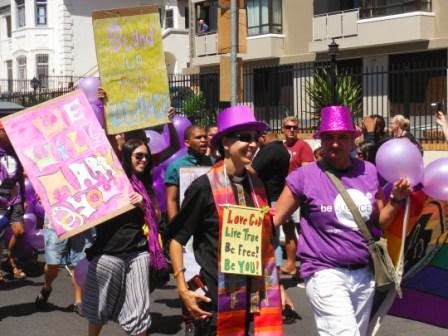
This midterm, I hauled myself 1,700 kilometers across the continent from Swaziland to Cape Town Pride. And while, over the course of five days, I spent a grand total of 60 hours on a bus, and a mere 8 hours asleep in a proper bed, it was totally worth it. No doubts, no questions - it was absolutely, positively fabulous.
Gay Pride is something that happens all around the world, in various countries, albeit at different times of the year. It's a celebration of diversity, and an acceptance for being one's self, and essentially a big party to promote free love in such a world full of hate. While South Africa has a liberal constitution that allows gay marriage, hate crimes still run rampant, and neighboring nations such as Zimbabwe and Swaziland still have extremely anti-gay laws in place.

And yet, thousands upon thousands of people turned up in the street for the parade and festival. I don't know exactly when I realized it, but I found myself very nearly crying at the sheet sight of so many different people all together. I don't even know how to express the feeling of seeing it, especially after having been living in Swaziland for the last year, which is not the nicest place to be queer (I'm technically breaking the law every time I enter the country). And so, after quite a long time in Swaziland now, being a part of Cape Town's Pride literally made my heart swell.
I guess this is the moment that sums it up for me: at one point, this particular drag queen was on stage. Her name is Mary Scary, she's wonderful, and yeah. Anyways, she was up on stage, and she says, "Let me hear you if you've ever been called a dyke! Let me hear you if you've ever been called a faggot!" Hearing the noise that people made after that made my legs practically drop out from under me. Sometimes (that's a lie - most of the time), it's difficult to be proud, faced with so many of the attitudes and discrimination against being queer in Africa. Many times, especially in Swaziland, where essentially nobody else at school is openly gay, it's isolating. Yet, there at Pride, the feeling of being one of a thousand people standing there, all sharing the same struggle, and all making it, despite every attempt made against us - it's more than powerful.
Then, led by the queens, the entire crowd lurched into a roaring rendition of (this one's for you, Ugandan legislators), "F*** YOU! F*** YOU VERY MU-U-UCH!"
I feel like I can't really articulate what this Pride meant. More than the wonderful-ness of seeing drag shows, more than the freedom of gay bars and clubs, more than the happiness of dancing on a parade float, throwing glitter at angry people watching us from their windows, it was a few days to be really, truly proud. Not necessarily rainbow socks and tiaras "proud" (although that was definitely a thing), but simply PROUD-proud. Proud as in not caring what people thought. Proud as in not worrying about people thinking the whole thing was "too gay." Proud as in showing love.
And while love is not the easiest thing, especially in a place with attitudes that are so filled with hate, love is still love, and that is a beautiful thing.

Wednesday, February 26, 2014

There's too much English on the internet.

Kufanele ngibukete siSwati nyalo, ngako-ke ngitawubhala ngesiSwati. Ngihlala eSwatini - ngobani angibhali ngesiSwati? Ngiphupha kutsi i-internet ikhone kuba ngesiSwati, siZulu, netilwimi tonkhe emhlabeni. I-internet, singayitfola yonkhe ngesiNgisi, ngako-ke ngitawutama kubhala ngesiSwati. Ngisifundza - angicabangi kutsi ngati sonkhe siSwati, kepha angicabangi kutsi ngati sonkhe siNgisi! Kulungile, ngiyacala...

Ngitsandza kuhamba entsabeni lonkhe liviki. Uma ngikhona kuhamba, ngijabulile kakhulu. Ngiye entsabeni nematfombatana waseZimbabwe. Sijabulile kakhulu!

Ngikhuluma siFolenji, ngako-ke, ngete luhlolo. Nyalo, ungabona liphepha kute ngifundze eFulansi, ngente inyuvesi yonkhe ngesiFolenji. Ngesancele, ungabona indvodza yaseNgwenya. Yena, ufundzisa siFolenji enyuvesi yaseSwatini. Ngesekudla, ungabona "la directrice d'Alliance Francaise." Batali bakhe baphuma eMelika, kepha ukhuluma siFolenji.

Nyalo, ehlobo, kuyashisa. Ngitsandza kubhukusha lapha ngemphelasontfo. Ncesi, Melika, ngati kuyabandza kakhulu lapho, kepha lapha, ngingagcoka isikipa, futsi ngiyashisa! 

Ngicabanga kutsi ngicedzele kubhala lapha.Ngiyabonga!

Gone Rural, Gone Global?

(This is an article on Gone Rural BoMake, an NGO here in Swaziland, based on a visit to their site and interview with the a director. Please check out their website for more detailed information on what they do in different areas of the community).

At Waterford, all IB students are involved in various sorts of community service, but we each have at least one "big" project to work on each year. This year, my two big projects are a women's empowerment group, and the computer classes that I started teaching last year.

Yesterday, our women's empowerment group went to visit Gone Rural BoMake, a group that creates an extra source of income for rural women by selling handicrafts that the women make, mostly from grass and recycled materials. The organization then sells the handicrafts to upmarket shops overseas, using some of the profits for the women's income, and some to support other community projects, such as a mobile medical unit and paying for school fees for OVCs (orphans and vulnerable children).

Walking into Gone Rural, there's a large mosaic on the wall reading "Sukumani, bomake!" (translating roughly into "Stand up, mothers!"). The lawn was lined with racks of dyed grass, drying after being colored. The way the group works, the women gather grass from where they are, and give it to Gone Rural in exchange for grass that has been dyed. The cost of the dye is part of the business plan for the NGO, and so there are no supply costs to the women.

At that moment, it started pouring rain, as it often tends to do in Swaziland, and so we all crammed inside a second barn, where the rural women were selling their handicrafts to Gone Rural. At the beginning of each year, the women decide on a price they would like to recieve for a certain item. Thereafter, anybody who makes that item will recieve the same price from Gone Rural for it. Gone Rural buys the handicrafts from the women for this price, and then marks them up to sell to the outlets abroad, to make money to pay for dyes and administrative costs. The outlets abroad then mark them up even more, which is why there are grass placemats for fifteen US dollars.

After that, we went into their storeroom, where they keep the completed products that are waiting to shipped off to the shops. The stores were truly stunning, with stacks of beautifully woven baskets from ceiling to floor, in all sorts of colors, shapes, and different varieties. There were baskets made of grass, recycled materials, and even t-shirt scraps from a factory in Mbabane. Some had ceramic bits in the centers, and some were just grass.

As someone who has lived in America for the majority of my life, I have indeed encountered shops selling this sort of stuff as "African" and "tribal," and I wonder what to think about it.  If people abroad are really into these styles, and really like grass placemats and baskets, then more power to them! But, I wonder how much of the business is created on the portrayal of the rural women as some sort of charity case, who need support through these purchases, and how much this mindset funds the NGO. While it's great that this can be a source of income for the women, on a global scale, I'm not comfortable with the fashion being charity - especially such ignorant charity. And, judging by the names of the companies selling the items, I wonder whether the retail of these sorts of products abroad furthers the ignorant consolidation of Africa into one landmass of grass mats and baskets. There was a pile of baskets going to "Kalahari," an Australian retailer. I wonder whether the customers of that company could differentiate between where the Kalahari is, and where Swaziland is. (Hint - far away). There was a pile of placemats going to an American company called "Ten Thousand Villages," and I don't think that's going to help with America's perception of Africa, either.

But, nothing is perfect, and BoMake has created something that is relatively sustainable, and seemed to be doing an effective job providing some extra income to the women. But, from the perspective of a representative of a women's empowerment group, I wanted to know what the NGO was really doing to empower the women, beyond providing them with an extra income.

Now, before I continue, I want to make it clear that BoMake is doing good work, providing a mobile clinic, and a support structure for these women and their familes that would probably not otherwise exist. But, I am less positive about how they are creating an empowering environment to these women.

I asked the woman in charge how long women tend to work for Gone Rural on average, making these handicrafts. I was hoping to hear that Gone Rural was a stepping stone for women to start their own businesses, or get involved in something of their own choosing, but that wasn't the case. To the woman's credit, she said that the NGO helps to pay for funeral costs, but that's not exactly the empowering answer that I was looking for. Once a woman starts working for Gone Rural, it doesn't seem like there's much of a chance for any stepping up beyond being an artisan. Admittedly, it's better than nothing, but it doesn't really strike me as the creation of a ladder, which is what I tend to think of women's empowerment as. Whether or not people choose to use it is another issue, but the ladder has to be there. This ladder, while it was technically there, had only one rung, and then nothing else.

I wish that groups like this would educate the women in business techniques and entrepreneurship skills, which could be transferred, should they choose to pursue other work. Weaving grass, while providing an income in this one environment, isn't the most transferable skill.

The woman then elaborated that the women's daughters oftentimes start working for Gone Rural when they turn sixteen, which is the youngest age that the company will allow. At this point, I couldn't help but wonder how empowering something really is, if even as generations pass, people find themselves in the same position. Sure, they're no longer at the bottom, but it's as though their ceiling is so much lower than everybody else's.

I'm not sure what else to say. It just feels like another story of an NGO that is doing really good work, but still struggles to find a way to balance charity, aid, empowerment, and the humanity and dreams of everyone involved. And I suppose that's the issue that is always faced in community service, whether it's here in Swaziland, or anywhere.

Monday, February 17, 2014

Because I Can't Remember Arabic, I'll Write in French?

Last night, another student arrived here at school, from Iraq. He's a wonderfully nice guy, but his English is anything but wonderful (yet). The thing is, he's from Iraq, and I really wanted to use my Arabic, but I just realized how absolutely terrible my Arabic is! It's strange, to know that I knew things at one time, and now simply have no idea. Want to know how extreme this is? I used to be able to write pages and pages in Arabic, and now the only word I can seem to pull out of my head is "al-umam al-muta7eda" (United Nations).

My French is wonderful, and I'm quite proud of my siSwati, but after three years of no use, my Arabic is not in the state that I wish it would be in. Strange, considering all the effort that the State Department put into trying to convince me to maintain my Arabic after NSLI-Y, but it just didn't happen. Now, though, I really want to fix it in university. Scratch that - I will definitely be fixing it in university. Insha'allah.

And now, to remind myself that all of languages are not absolutely terrible, I have (loosely, because I'm tired and my brain isn't fully functioning this early in the morning) translated this post in French, as seen below.

La nuit dernière, un autre étudiant est arrivé ici à l'école, d'Iraq. Il est absolument gentil, mais son anglais n'est pas (encore) aussi gentil. Donc, il vient d'Iraq, et j'ai vraiment voulu utiliser mon arabe, mais j'ai réalisé comment pas terrible mon arabe était devenu. C'est bizarre, à savoir que j’aie su les choses, il était une fois, et maintenant je n’ai aucune idée. Voulez-vous savoir comment extrême est-il? J'avais pu écrire des pages et des pages d'arabe, et maintenant le seul mot qui je peux souvenir est "al-umam al-muta7eda" (les Nations-Unis).

Mon anglais est super, et je suis vraiment contente avec siSwati, mais après trois ans sans l'utiliser, mon arabe n'est pas dans l'état que je voulais. Bizarre, en considérant tout l'effort fait par le gouvernement des Etats-Unis pour me convaincre de continuer avec l'arabe après mes études en Jordanie avec NSLI-Y. Mais, c'est la vie. Maintenant, alors, je voudrais l'étudier à l'université. Attends, je suis sure que je vais l'étudier a l'université. Insha'allah.

Et maintenant, pour me souvenir que tous mes langues ne sont pas absolument terrible, j'ai (peut-être, à cause des problèmes dans le cerveau qui existe à cette heure du matin) traduit ce blog en anglais, comme vous pouvez voir en haute.

Monday, February 10, 2014

Olympics, Pancakes, and Hiking

This weekend was such a great time away from school, at least for a few days. I spent Friday night at a friend's house, watching the opening ceremonies of the Olympics. Sadly, Swaziland did not have a team, but Zimbabwe was well-represented! I mean, if you can call one athlete well-represented, but good for him! I am continuing to fight for the TV room at school when I want to watch certain events, because the guys in hostel seem to think that soccer is constantly more important than luge. But, that might just be because those who have grown up in the southern hemisphere are woefully uneducated in the ways of winter sports. We had a good time watching figure skating ("HOW DO THEY DO THAT WITH THEIR BODIES?") and freestyle skiing last night ("Wait, so it's a race, but they also get points on how their knees are held together, AND how they flip off the jumps?").

Anyways, then, on Saturday, I spent the morning working at my friend's dad's restaurant in Mbabane. They were having an all-you-can-eat pancake breakfast, and so I was waitress-ing. Let me tell you - keeping coffee coming to people is not easy.But, that kind of stressful, energetic, dealing-wth-impatient-people kind of work just happens to be my forte (cough, used to work at Toys-R-Us, cough), and so I felt quite at home. I know, I'm strange, but I really enjoy working, and it's not something I get to do all that often here in Swaziland. And, while I spent the whole day thinking I was just helping out, I got paid at the end - that's a few hundred more emalangeni to help finance my return to Cape Town in a few weeks!

So, that was Saturday. Then, yesterday (Sunday), we went hiking just outside of Mbabane. The hike was along this ridge, and then down into a valley where we swam in the river. The thing with this hike is that, while navigation is pretty easy (stay on top of the ridge), there are these massive boulders along the way, and you can find yourself pretty easily in quite a sticky situation, where you don't want to go forwards or backwards. Essentially, the whole thing turned into more of a climbing than a hiking trip, with people pulling each other up rock faces, or yelling encouragement as people essentially crossed their fingers and jumped three meters down. It was very team-build-ish, but definitely a great time. And, the swim in the Mbuluzi never ceases to make me happy.

So, that's about it! Now I'm back in school for another week, trying to enjoy it, but already missing the weekend! Here's a picture of our lunch spot yesterday, and our swimming spot.


Monday, February 3, 2014

Superbowl... Monday?

This is going to be a very short post. We spent last night watching the Superbowl, which started at 1:30 am on Monday (today) here because of time differences. Here's a joke: what do you get when you stick a Norwegian, a Bolivian, a Zambian-German, a Dutchman, a Turk, and two American girls in a room to watch the Superbowl?

Cupcakes, because that's what you make at three in the morning when nobody really understands what's happening with the game.

Anyways, I didn't get a single wink of sleep, but it was a wonderful night, and totally worth it. #uwclife.

Saturday, February 1, 2014

The Lovely People of Mpaka

Today added another event to the continuation of Waterford's community service projects related to Mpaka Refugee Camp here in Swaziland. The difference? Last year, I simply helped out with these projects, while this time, I ran it.

As compared to other events we've run with Mpaka, which oftentimes focused on entertaining the younger kids at the expense of the older ones, this event was geared for high schoolers and up. Apparently, at the camp, the bus driver went through quite the battle to make sure that parents didn't get their ten year-olds onto the bus, because the day we had planned back at school was not catered for younger kids. But, once the people from Mpaka made it all the way back to Mbabane, and to Waterford, we were waiting, and the day only went uphill from there.

This was meant to be a day with purpose. Once everyone got there, we broke into discussion groups. There was a group for those interested in working in medicine, a group for those wanting careers in science, one for those interested in business, and various other groups for those who weren't yet quite sure. The core in all of the groups was discussing issues in education, and how to achieve despite them, along with goal-setting, careers, and general things in life that everyone would like to see improved.

After settling all the groups down into their respective locations (sigh, organizing 150 people is hard), I sat down with my favorite group of people to talk to - the twelve-year old boys. They're hilarious honest, and goofy, and just great to be around. Last time I had talked to this particular group, they had described the challenges they were having in school because they weren't Swazi. This time, several of them were speaking siSwati, and said that everything was great. (They're still oh-so proud of their English).

The boys had plenty of ideas that were different for each other, but the one thing that they could agree on was that the worst thing at the camp was drinking and smoking. It's always strange to see a group of twelve year-olds swearing that they'll never drink, and wondering whether they'll be able to keep that up, especially considering the particularly difficult hands of cards that they've been dealt. I really hope they can.

After these discussion groups, we quickly gathered back in the ampitheater to re-group. I couldn't help but smile as I heard Waterford business students talking with some of the older guys from the camp about what you need to start a business. Sometimes it feels like discussions are a waste of time, but in other ways, it's empowerment. Knowledge is power.

Anyways, after that we split into what I had meant to be the "fun activities." I put that in quotes not because they weren't fun, but because they were just so much more productive than I expected. Everyone picked between the climbing wall, volleyball, dancing, Wii, and using the computers. I headed over to the IT center, which proved to be the most popular choice by far.

Once we got over there, these guys used the one hour they had on the internet to their advantage! I've never seen so many school admissions applications, college forms, and homework printed. They were creating email addresses, typing business letters, and researching scholarships. I genuinely hope that something works out that stems from that one hour, because it was the most glorious use of the IT center that I have ever seen.

Overall, it was just a wonderful day. It's a strange perspective to look back on an event and be proud of how I organized it, and not simply of just "how it went." (Believe me, nothing ever just "goes." Someone makes it "go"). The understanding that everyone has a chance to do whatever they want in life is something that can sometimes pass kids up when they grow up in the camp, and I strongly believe that days like this make a difference. And that makes me proud.

For tonight, I've got a geography essay, a French essay, and a whole mess of random homework. And I'm thankful for that chance. And I'm not even being facetious.